



Introduction
You have a song in your head. Maybe it’s a melody you can’t quite finish. Maybe it’s a set of lyrics waiting for the right voice. Or perhaps you need an original soundtrack for a video, but hiring musicians and spending days in a recording studio isn’t practical. That’s where AI music generators promise to help.
Today, these tools can turn a few written instructions into melodies, instrumentals, and even complete songs with vocals. But there’s a catch: generating music is one thing. Generating music that sounds good, follows your instructions, and gives you enough control to make it genuinely useful is another.
Mureka is built to close that gap. It’s an AI music-creation platform that helps users turn descriptions and lyrics into songs, experiment with musical styles, produce instrumentals, customize vocals, and refine their creations through editing and production tools.
That makes it potentially useful to a wide range of people: someone writing a personal song, a YouTuber looking for background music, a songwriter exploring arrangements, or a producer developing ideas for a more involved project. Mureka is developed by Singapore-based Skywork AI Pte. Ltd., a company associated with Kunlun Tech’s AI technology businesses.
Its story began with SkyMusic in early 2024. The first beta arrived in February, followed by Chinese- and English-language releases in April. Those early versions laid the groundwork for the music-generation, vocal, and creative-control features that would follow. You can trace those developments through Mureka’s company history and its 2025 announcement. But how widely has Mureka been adopted?
Its corporate LinkedIn description claims that the consumer platform has attracted nearly 10 million users worldwide. That’s a substantial figure, but it comes with an important qualification: it isn’t identified as a count of paying subscribers, and its exact measurement date is unclear. As of October 8, 2026, we couldn’t independently confirm a reliable current number of Mureka’s paying subscribers or paying customers.
And that distinction matters. Someone who tries a free music generator once isn’t the same as someone who finds it useful enough to pay for every month. At Find Premium AI, we wanted to answer a similarly practical question: How well does Mureka actually perform when people use it for real creative work? Our research wasn’t built around one afternoon of testing or a handful of prompts.
Over several years, our 15-person research team experimented with different models and generations of AI music and audio products, including Mureka as its capabilities evolved. Team members tested these tools at different times and across varied tasks involving songs, music, audio, and voice. The work covered creative interpretation, music generation, vocal quality, revisions, production workflows, and the practical differences between subscription plans.
We also explored available pricing tiers through October 6, 2026, to understand which features made sense for different users not simply which plan offered the longest feature list. On October 6, 2026, we finalized our six-company scorecard using seven weighted evaluation factors. The result? Mureka ranked third out of six products, with an overall score of 7.65. ElevenLabs and Suno finished ahead of it. Descript, Adobe Firefly, and MiniMax Audio finished behind it.
That’s a respectable position. It also tells only part of the story. Mureka offers an impressive range of creative tools. But our findings also reveal limitations in output consistency, instruction-following, and the confidence we can place in public customer feedback. One important note: This is Find Premium AI’s independent assessment, not an official industry ranking. Our hands-on scores were finalized on October 6, 2026. Product developments and external information checked through October 8, 2026, are discussed separately.
With that context, let’s look beyond what Mureka promises and examine what matters to someone considering a subscription: how well it creates music, where it struggles, how it compares with alternatives, and whether its plans are worth paying for.
Performance
Mureka V9.5: How Far Has the Music Model Come?
AI music generators are moving quickly. A model that seemed impressive one year can sound noticeably less capable the next. That’s one reason the version being evaluated matters. As of October 8, 2026, Mureka V9.5 was the latest relevant music-generation model we could verify for its consumer platform. Released on August 13, 2026, V9.5 followed the introduction of V9 earlier that year. Mureka’s release history describes improvements in melody, harmony, arrangement, vocal expression, and the model’s ability to understand musical instructions.
Those improvements didn’t happen all at once. Mureka O1 and V6 expanded musical reasoning and multilingual song creation. V7 and V7.5 continued developing the relationships between melody, harmony, and song structure. V8, released in January 2026, focused on richer musical expression and more complete arrangements. V9 arrived in March with stronger text-based controls within song sections, improved mixing, and greater responsiveness to instructions.
V9.5 continued that progression, concentrating on how the different parts of a song work together. Why does that matter? Because a convincing song isn’t just a collection of attractive sounds. A chorus needs to feel connected to the verse. Instruments need room to breathe around a vocal. A melody should develop naturally. And a singer should sound as though the words carry meaning not simply as though a machine has assigned notes to syllables.
Mureka’s underlying MusiCoT framework is designed to improve those relationships by connecting musical structure with melody, rhythm, harmony, vocals, and arrangement. The goal is a more coherent composition, not merely a faster generation process. Mureka’s own V9.5 evaluation, published August 28, 2026, reported measurable improvements.
In an evaluation involving 100 songs, V9.5 achieved a 61.0% vocal pass rate, compared with 53.0% for its previous comparison baseline. Prompt-control performance increased from 92.0% to 97.0%. Fully expressed genre performance rose from 84.9% to 95.7%. Those results are encouraging. Better vocals and better adherence to genre instructions address two problems that can make AI-generated music frustrating.
But there’s an important qualifier: These are Mureka’s own measurements, not independent findings. And one result deserves particular attention. The company’s overall usability rate reached only 28.0%, up from 25.0%. In other words, improvements in individual model capabilities didn’t mean every song became useful from start to finish. That’s a useful distinction to remember when evaluating any AI music generator: A more capable model isn’t necessarily a model that delivers exactly what you need on the first try.
Can Mureka Create Music You’ll Actually Want to Use?
Here’s where Mureka becomes interesting. You don’t need to begin with a finished composition. You can start with a feeling, a few lyrics, or a description of what you want to hear. You might ask for a particular genre, mood, instrument combination, or vocal style. You can supply lyrics and have Mureka develop the melody and accompaniment around them. That opens up several useful workflows.
A songwriter can explore different musical treatments of the same lyrics. A creator can experiment with background music for a video. Someone without formal music training can hear an idea developed into a structured composition. A producer can use generated music as the starting point for further work.
But the real test isn’t whether the software can create something. It’s whether the result is good enough to keep and how much work it takes to get there. In our October 6 evaluation, Mureka scored 7.9 for Music, Audio & Voice Quality. That placed it below Suno at 8.6 and ElevenLabs at 8.5.
Our assessment considered considerably more than first impressions. We examined melody, harmony, rhythm, arrangement, structure, lyrical quality, natural singing, sound realism, audio clarity, production artifacts, pronunciation, emotional expression, and speaker consistency.
Mureka demonstrated credible creative capabilities across those areas. Still, a score of 7.9 isn’t a declaration that every generated track is polished or production-ready. Some outputs may work well with little intervention. Others may need a new vocal take, changes to the arrangement, corrections to individual sections, or additional production work.
How much that matters depends on what you’re making. If you’re exploring ideas for a personal song, a little variation may be part of the fun. If you’re producing a soundtrack that must end at a precise moment, follow a detailed brief, and contain no unwanted instruments, that same unpredictability becomes a problem. An independent August 2026 test helps illustrate the difference.
The researcher completed eight Mureka V9 generations. Every successful output returned a 44.1 kHz stereo MP3 file, with generation times ranging from approximately 58 to 86 seconds. That’s useful speed for creative experimentation. However, all six prompts requesting 90-second tracks produced longer songs. The test was small, involved V9 rather than V9.5, and wasn’t designed to establish how every model performs across every genre.
Nevertheless, it documents an important limitation: Generating music successfully doesn’t guarantee that the music follows every instruction successfully. That distinction also helps explain our team’s 7.5 Prompt Accuracy score. Mureka can understand and develop a creative direction. But buyers who need consistent control over exact timing, structure, instrumentation, or vocal delivery should expect to check the results carefully.

Vocals, Editing, and the Tools Beyond Song Generation
A complete song generator is useful. A complete song generator that lets you work on the result is potentially much more useful. Mureka has been building toward that second experience. Beyond generating songs, the platform offers text-to-speech, voice customization, reusable singer identities, remixing, song extension, and tools for changing selected sections.
In June 2026, Mureka introduced an upgraded Character feature designed to help creators maintain a recognizable vocal identity and avatar across musical projects. That’s an appealing capability for someone developing a consistent musical persona or working on a collection of songs that should share a particular voice. But vocal consistency still has limits.
Mureka’s official FAQ acknowledges that an audio reference can sometimes take priority over a vocal-gender instruction. That means a user may specify one vocal characteristic and receive something different because the supplied reference influences the generation more strongly. For casual experimentation, that may be an inconvenience. For a project requiring a particular singer identity, language, accent, or emotional delivery, it’s a more consequential issue.
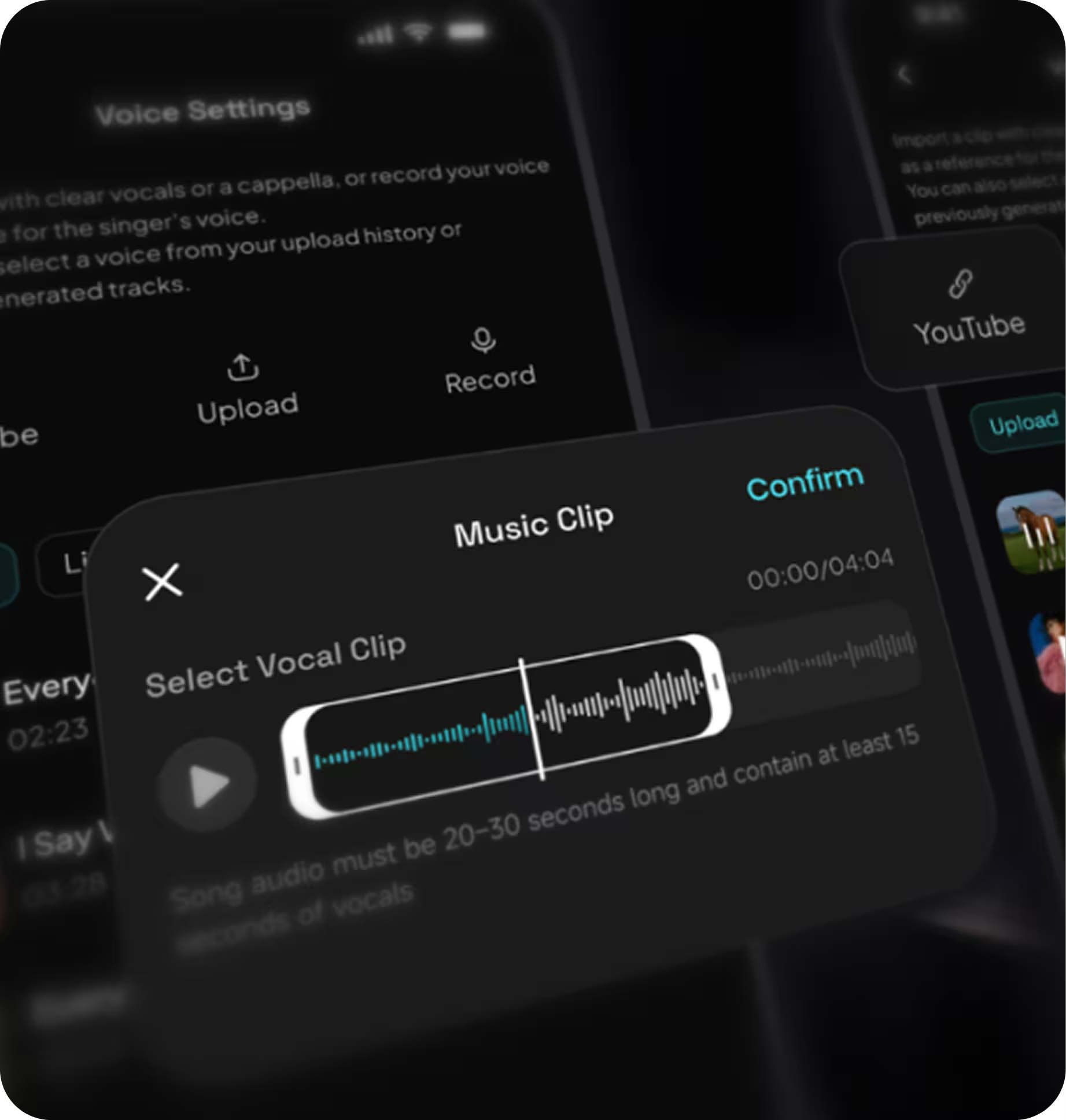
Mureka’s editing features help address some of the other limitations of generative music. Remix lets creators explore alternatives. Extend provides ways to develop a track further. Selected-area editing makes it possible to focus on part of a composition instead of starting the whole song over. Mureka Studio adds more detailed timeline and production controls, while stem separation allows users to work with individual musical components.
There’s also Mureka Co, which brings conversational assistance into certain music-production and digital audio workstation workflows. One subscription detail is worth clearing up: Mureka expanded Mureka Co access to Pro subscribers in July 2026. You don’t need Premier simply to access that feature. Premier’s additional value lies primarily in its more advanced studio environment, professional voice capabilities, and expanded export options.
That’s a meaningful difference when deciding whether to pay more. Mureka also supports AI music videos and related visual content. Those features can make the platform more useful for creators producing both audio and video, although they don’t automatically make the underlying song sound better. The larger point is this: Mureka gives creators more opportunities to shape their music after generation. That flexibility is valuable. It also shouldn’t be confused with a guarantee that every generated song will require no further editing or that Mureka can replace every function of a conventional recording studio or professional DAW.
What Independent Listening Tests Tell Us
Company demonstrations tend to show music at its best. That’s understandable. But if you’re deciding whether to spend money, you also want evidence that doesn’t depend entirely on the company’s preferred examples. Independent listening comparisons provide another perspective. The Artificial Analysis vocal leaderboard, checked October 8, 2026, recorded an Elo score of 1,103 for Mureka V9.5, based on 2,112 listening samples.
Suno v6 scored 1,142 from 2,077 samples. Mureka V9 scored 1,052 from 2,140 samples. The leaderboard uses blind listening comparisons. Evaluators compare music without knowing which model produced it. Mureka V9.5 ranked third by Elo point estimate, although its reported 95% confidence interval of ±15 points overlapped with Suno v6-mini’s interval.
That gives us two useful observations. First, Mureka V9.5 showed an encouraging improvement over V9 in the vocal-music evaluation. Second, the results didn’t establish that Mureka had overtaken Suno. It’s also important to keep these benchmark results separate from Find Premium AI’s scores. Artificial Analysis measures preferences in a listening comparison. Our evaluation considers seven factors, including quality, speed, creative intelligence, instruction accuracy, usability, features, and public feedback.
A song can perform well in a listening test while the software that created it remains less convenient for editing, narration, exporting, or commercial production. Both kinds of evidence are useful. They simply answer different questions.
The Commercial-Use Question
Before turning an AI-generated track into something you’re selling, publishing, or delivering to a client, there’s another question worth asking: What rights do you actually have? Mureka advertises commercial-use permissions for paid subscribers. But the details matter. Under the company’s May 13, 2026 terms, paid users receive ownership of generated outputs to the extent that legally recognized intellectual-property rights exist.
Free-tier outputs are treated differently. They remain owned by Mureka, with a restricted license for internal, noncommercial use requiring attribution. The terms also explain that generated works may resemble other material and may not qualify for copyright registration. Mureka receives broad licensing rights over content generated through its service as well.
That means paying for a subscription doesn’t automatically guarantee that every output is unique, copyright-protected, or free from possible third-party claims. And it doesn’t give users permission to upload someone else’s protected lyrics, music, or voice recordings without the necessary rights. For commercial projects, the sensible approach is to examine licensing alongside audio quality not after a track is already scheduled for release.
How We Evaluated Mureka: Seven Factors That Matter
Our 15-person team’s research spanned different models, different tasks, and different subscription experiences over several years. To bring those findings into a consistent comparison, we finalized our October 6, 2026 scorecard using seven weighted factors. Each measures something that can affect whether an AI music or audio tool is worth paying for.
| Evaluation Factor | What It Measures | Weight |
|---|---|---|
| AI Intelligence | Understanding creative intent, interpreting musical and audio references, developing original ideas, choosing suitable vocal expression, and responding intelligently to revisions | 15% |
| Speed | Time and consistency from request to usable songs, instrumentals, audio, or speech including generation, revisions, retries, and exports; response latency for real-time voice | 10% |
| Music, Audio & Voice Quality | Songs and music: melody, harmony, rhythm, arrangement, structure, lyrical quality, and natural singing. Audio: clarity, sound realism, production quality, and freedom from noise or artifacts. Voice: intelligibility, naturalness, pronunciation, pacing, intonation, emotional expression, and speaker consistency | 25% |
| Prompt Accuracy | Adherence to requested genre, mood, tempo, instruments, lyrics or script, language, accent, pronunciation, vocal style, emotion, duration, timing, and exclusions | 20% |
| User Rating | Public satisfaction from credible, product-specific reviews, prioritizing people who actually use the relevant song, music, audio, or voice features | 10% |
| Review Confidence | Authenticity, volume, recency, relevance, diversity of independent review sources, and whether reviews match the evaluated features and current product or model | 5% |
| Features & Usability | Lyric and script controls, section editing, track extension, stems, audio editing, voice libraries, voice cloning and conversion, pronunciation controls, dubbing, export quality, integrations, workflow, learning curve, pricing value, and clarity of commercial-use terms | 15% |
Why these seven? Because an impressive music sample tells you surprisingly little about the experience of making the next ten songs. A useful tool needs to understand your ideas, create convincing results, respond to changes, and fit the way you work. It also needs to make financial sense. Those are the questions our evaluation was designed to answer.
Comparisons Before You Buy
What Mureka’s Scores Really Mean
Mureka finished our evaluation with an overall score of 7.65, placing it third among six products. But the overall number becomes more useful when you look at what’s underneath it. Its highest score was 8.7 for Features & Usability. Speed followed at 8.0, with Music, Audio & Voice Quality close behind at 7.9. AI Intelligence scored 7.8, while Prompt Accuracy came in at 7.5. The weakest results were User Rating and Review Confidence, both at 6.0.
There’s a revealing pattern here. Mureka offers a strong collection of creative tools. But those tools don’t always translate into equally strong execution of detailed instructions. Consider the 1.2-point gap between Features & Usability and Prompt Accuracy. You may have several ways to edit, remix, or extend a track. That’s useful. But if the model repeatedly misunderstands an instruction, those extra controls may become tools for fixing problems rather than simply improving the music.
Whether that trade-off matters depends on the user. A songwriter experimenting with ideas may enjoy exploring alternative generations. Someone producing an exact 30-second soundtrack or a precisely specified vocal performance may have much less tolerance for variation. The two 6.0 scores deserve attention for a different reason.
They reflect our assessment of customer satisfaction and the strength of the available public-review evidence. They don’t establish that most Mureka users are unhappy. They do show that our team found the public-feedback picture less convincing than the platform’s collection of technical features.
The overall message is straightforward: Mureka is rich in functionality and capable of useful creative work. But consistency and customer confidence are areas where buyers should be more cautious.
The Six-Company Scorecard
Here is the final Find Premium AI ranking, based on our team’s evaluation completed October 6, 2026.
| Product | Overall Score | AI Intelligence | Speed | Music, Audio & Voice Quality | Prompt Accuracy | User Rating | Review Confidence | Features & Usability | Best For |
|---|---|---|---|---|---|---|---|---|---|
| ElevenLabs | 8.58 | 8.9 | 8.6 | 8.5 | 8.6 | 7.6 | 7.0 | 9.5 | Projects combining narration, songs, sound effects and voice production |
| Suno | 8.14 | 8.4 | 8.3 | 8.6 | 8.0 | 6.5 | 6.5 | 8.8 | Complete vocal songs and substantial music-production revisions |
| Mureka AI | 7.65 | 7.8 | 8.0 | 7.9 | 7.5 | 6.0 | 6.0 | 8.7 | Song drafts developed with references, remixing, stems and production exports |
| Descript | 6.99 | 6.6 | 6.5 | 6.6 | 6.5 | 7.2 | 6.5 | 9.0 | Podcasts, recorded dialogue, narration and editing audio inside a project |
| Adobe Firefly | 6.82 | 6.5 | 6.8 | 6.3 | 6.3 | 8.8* | 4.0 | 8.3 | Video soundtracks, instrumental backing, voiceovers and sound effects |
| MiniMax Audio | 6.07 | 6.0 | 6.5 | 6.1 | 6.1 | 5.0† | 3.0 | 7.5 | Speech, voice cloning and music experiments with web/API options |
* Adobe Firefly, 8.8/10: Based on one G2 rating for the overall Firefly product. It does not specifically measure its music, audio or voice features. † MiniMax Audio, 5.0/10: A neutral placeholder because a reliable, comparable customer-rating average was not verified. It is not an actual customer rating.
Find Premium AI’s internal weighted evaluation, finalized October 6, 2026. There are no ties in overall ranking. Adobe Firefly’s User Rating of 8.8 includes an asterisk in the original scorecard, but the supplied material does not explain that qualification. These values represent our evaluation, not public star ratings.
The table makes one thing clear: There’s no single product that’s equally suitable for every kind of music, audio, and voice project. The more useful question is which strengths and which compromises matter for your work.
Mureka vs ElevenLabs: A Broader All-Around Performer
ElevenLabs finished first with 8.58, putting it 0.93 points ahead of Mureka. It also outperformed Mureka across all seven factors. AI Intelligence was 8.9 versus Mureka’s 7.8. Prompt Accuracy was 8.6 versus 7.5. Features & Usability reached 9.5 compared with Mureka’s 8.7. That’s a meaningful advantage for people whose projects involve more than songs alone.
If you regularly combine narration, speech generation, music, sound effects, and broader voice-production tasks, ElevenLabs presents a stronger all-around option within the capabilities we evaluated. But that doesn’t mean a music-focused buyer should ignore Mureka.
Someone who primarily wants to develop song drafts, experiment with references, remix arrangements, or work with music-production exports may find Mureka’s particular workflow more appealing. The higher overall score gives ElevenLabs the advantage in our evaluation. Your main creative task still determines which product deserves closer consideration.
Mureka vs Suno: A Close Competitor for Complete Songs
For people interested primarily in AI-generated songs, Suno is an especially important comparison. Suno finished second with 8.14, ahead of Mureka by 0.49 points. The most relevant difference is in Music, Audio & Voice Quality. Suno scored 8.6. Mureka scored 7.9. Suno also led in Prompt Accuracy, scoring 8.0 against 7.5, and AI Intelligence, scoring 8.4 against 7.8.
These differences matter when you want a complete song that sounds convincing and stays reasonably close to a particular musical direction. The Features & Usability results were much closer: 8.8 for Suno and 8.7 for Mureka. A 0.1-point difference doesn’t establish a convincing practical advantage across every workflow. Our scorecard favors Suno for complete vocal songs and substantial music-production revisions.
Mureka remains a credible choice for creators who specifically value its approach to references, remixing, stems, and production exports. The independent Artificial Analysis vocal leaderboard also places Suno v6 ahead of Mureka V9.5 by Elo point estimate. That finding supports taking Suno seriously, although the benchmark measures something narrower than our seven-factor evaluation. If complete AI-generated songs are your main priority, comparing both products with similar prompts is a sensible step before subscribing.
Mureka vs Descript: Create Music or Edit Audio?
Descript finished fourth with 6.99, trailing Mureka by 0.66 points. But comparing these tools is less about finding two versions of the same product and more about identifying different strengths. Descript scored 9.0 for Features & Usability, ahead of Mureka’s 8.7. Its User Rating score was also higher: 7.2 versus 6.0.
Those results help explain why Descript remains relevant for podcasts, recorded dialogue, narration, and editing audio inside a larger content project. Mureka has the stronger position in music generation. It scored 7.9 for Music, Audio & Voice Quality, compared with Descript’s 6.6. Its Prompt Accuracy score of 7.5 also exceeded Descript’s 6.5.
The decision comes down to what you’re making. If your job is mostly about creating original songs and instrumentals, Mureka is better aligned with that goal in our evaluation. If you’re editing spoken-word recordings, Descript deserves serious consideration.
Mureka vs Adobe Firefly: Music First or Multimedia First?
Adobe Firefly earned 6.82, placing fifth and finishing 0.83 points behind Mureka. Firefly is relevant to broader creative projects involving video soundtracks, instrumental backing, voiceovers, and sound effects. But our music and audio results favored Mureka. Mureka scored 7.9 for Music, Audio & Voice Quality against Firefly’s 6.3. Prompt Accuracy was 7.5 for Mureka and 6.3 for Firefly.
There’s also an important detail in the public-feedback category. Adobe Firefly received a User Rating score of 8.8* in our evaluation. But broader Firefly feedback may reflect image, video, and design capabilities not necessarily the audio features we were comparing. For a music-first workflow, our results favor Mureka. For someone already building multimedia projects inside Adobe’s wider creative environment, Firefly may still offer practical advantages.
Mureka vs MiniMax Audio: Different Strengths, Different Results
MiniMax Audio finished sixth at 6.07, 1.58 points behind Mureka. Mureka scored higher across every evaluated factor. Its Features & Usability result was 8.7 against MiniMax Audio’s 7.5. The differences were larger in Music, Audio & Voice Quality and AI Intelligence, where Mureka led by 1.8 points in each category.
MiniMax Audio remains relevant for speech generation, voice cloning, and web or API-based audio experiments. But when we evaluated the combined requirements of songs, music, audio, and voice, Mureka produced the stronger overall result.
A Ranking Is Useful. Your Workflow Still Matters
Our scorecard reflects hands-on research conducted by 15 team members across different models, tasks, and subscription experiences over several years. That breadth is valuable. It also doesn’t make the results universal. The genre you’re producing, the language you’re using, the complexity of your prompt, the required duration, and the version of the model can all affect your experience.
So can the importance you assign to different features. A difference of 0.1 points shouldn’t be presented as decisive. A larger difference may provide a stronger reason to investigate an alternative, but it still needs practical context. In our methodology, Music, Audio & Voice Quality and Prompt Accuracy account for 45% of the total evaluation. We weighted those factors heavily because convincing output and reliable instructions are central to creating useful audio.
Someone who cares primarily about subscription cost, professional voice cloning, or API access could reasonably rank the products differently. No winner was predetermined. Our rankings reflect the results our team recorded and the methodology we applied. Public user ratings provide supplementary evidence; they don’t automatically establish, validate, or replace our scores.
Customer Review
A product demonstration shows what software can do. Customer reviews can help reveal what it’s like to live with. That distinction matters for Mureka because public opinion isn’t nearly as consistent as a single star rating might suggest. Through October 6, 2026, our team collected ratings and reviews from several platforms, examining both the numerical results and the context behind them. Here’s what the sources showed.
Here’s what the sources showed.
| Review Source | Mureka Rating | Displayed Count |
|---|---|---|
| Trustpilot | 1.4/5 | 201 reviews |
| SourceForge | 3.0/5 | 1 review |
| Slashdot | 3.0/5 | 1 review |
| Product Hunt | 4.0/5 | 1 review |
| Google Play | 4.6/5 | 159K reviews in listing header; 157K in ratings section |
| Apple App Store (US) | 4.8/5 | 11K ratings, including ratings without written reviews |
These figures come from our team’s research through October 6, 2026. Ratings have not been combined into a single average. Counts can differ between listing sections and later observations.
The contrast jumps off the page. Google Play and Apple’s App Store show strong satisfaction. Trustpilot tells a much less flattering story. Which should you believe? The better question is what each source can and cannot tell you.
Google Play: The Broadest Visible Android Review Sample
If you’re planning to use Mureka on Android, Google Play is a useful place to begin. Its approximately 159,000 displayed reviews represent the largest visible Mureka review sample in the research we collected. That matters because a large body of feedback can reveal a wider range of user experiences than a platform with just one or two reviews. The Google Play rating in our collected data was 4.6/5.
The October 6, 2026 live listing continued to display 4.6/5, with 159K reviews in the header and 157K in the detailed ratings section. That’s a favorable overall result. Still, review volume isn’t the same as review relevance. Someone making a quick personalized song may be delighted by the result. A professional producer trying to follow a detailed client brief may judge the same tool much more critically.
The large sample is valuable for understanding general Android satisfaction. It isn’t, by itself, evidence that Mureka consistently meets demanding production requirements. There’s also a historical difference worth preserving. An earlier undated image from our six-company comparison research showed Mureka at 4.2/5 from 159K+ Google Play reviews.
Because that image doesn’t establish its capture date, we can’t say precisely why the result differs from the later 4.6/5 observation. They are separate snapshots, not numbers that should be quietly combined or treated as directly comparable across a known time period.
Apple App Store: A Strong Result From iOS Users
Mureka’s US Apple App Store listing showed 4.8/5 from approximately 11,000 ratings.
That’s another positive signal. But there’s an important distinction between a rating and a review. Apple’s figure includes people who submitted a star rating without writing a detailed comment. So it would be misleading to say Mureka received 11,000 written reviews. The App Store is useful for understanding broad iOS user sentiment. To assess details such as vocal performance, output control, subscription experience, and reliability, the written feedback is more informative than the average alone.
Trustpilot: The Rating Buyers Shouldn’t Ignore. Now for the uncomfortable part. Our October 6 research recorded Mureka at 1.4/5 from 201 Trustpilot reviews. When the listing was checked again on October 8, 2026, the rating remained 1.4/5, while the displayed count had increased to 203 reviews. That’s a stark difference from the app-store results.
The available Trustpilot feedback frequently raises concerns about subscription cancellation, unexpected charges, annual billing, refunds, and customer support. Some reviewers also report disappointment with repetitive music or output that doesn’t meet their expectations. It’s important to be precise here. These are individual customer accounts, not independent proof that every alleged billing problem happened exactly as described.
But that doesn’t mean the complaints are irrelevant. When similar concerns appear repeatedly, they’re worth considering especially for a product that asks customers to authorize recurring payments. The Trustpilot listing identifies Mureka’s profile as unclaimed and indicates that the company has no history of inviting customers to review it through the platform.
That context matters because review samples can be shaped by who decides to participate. People who are unhappy with a payment or cancellation experience may be more motivated to leave a review than people whose subscription works as expected. So Trustpilot shouldn’t be treated as a perfectly representative survey of every Mureka customer. But neither should its low rating be dismissed simply because Google Play and Apple show higher averages. For someone considering an annual subscription, these complaints are a good reason to read the billing conditions carefully.
SourceForge, Slashdot, and Product Hunt: Small Samples, Limited Conclusions. The smaller review platforms add context, but not enough volume to support sweeping conclusions. SourceForge and Slashdot each displayed 3.0/5 from one review. The Slashdot feedback discusses promising vocal quality alongside problems involving timing, song structure, and editing. However, that review dates to January 20, 2025
It predates several important model and feature updates, so it’s more useful as a record of the product’s earlier limitations than as a direct assessment of V9.5. The SourceForge and Slashdot information is also closely related. It shouldn’t automatically be counted as two independent sets of feedback. Product Hunt displayed 4.0/5 from one review.
Its listing helps explain how Mureka has been positioned and introduced to users. But one person’s rating, positive or negative, cannot establish broad customer satisfaction. These sources can offer useful details. Their averages simply carry much less interpretive weight than larger samples.
Why the Ratings Tell Different Stories
Different platforms attract different people. App stores include casual creators, mobile users, and people experimenting with music for entertainment. Trustpilot may attract a greater concentration of customers who want to discuss billing or service problems. Specialist software directories can attract more technical users, but their samples may be extremely small.
Review collection methods, incentives, moderation, audience expectations, and observation dates also vary. That’s why we considered source transparency, review counts, product relevance, accessible feedback, and the context surrounding individual reviews. We gave more interpretive attention to substantial samples and feedback that actually concerned the features being evaluated. We treated single-review averages cautiously.
We also don’t assume that every review on a selected platform is independently verified, nor that other review websites are unreliable simply because their results differ.
Our original six-company public-rating snapshot included these additional figures:
| Product | Source used | Public Rating | Votes & Reviews |
|---|---|---|---|
| ElevenLabs | G2 | 4.5/5 | 1.2K+ reviews |
| Suno | Google Play Store | 4.5/5 | 2.47M+ reviews |
| Mureka AI | Google Play Store | 4.2/5 | 159K+ reviews |
| Descript | G2 | 4.6/5 | 927+ reviews |
| Adobe Firefly | G2 | 4.4/5 | 371+ reviews |
| MiniMax Audio | Not Enough Solid Report | – | – |
These are values from the supplied historical snapshot, not claims about the platforms’ current ratings. They also concern different products and user experiences. For example, a review of Adobe Firefly’s image-generation capabilities isn’t necessarily informative about audio generation. For Mureka, the public-feedback pattern is worth taking seriously.
A large number of app users appear satisfied with the accessible music-creation experience. At the same time, some customers report significant frustration, especially involving subscriptions, billing, and creative control. Both perspectives belong in a thoughtful buying decision. And both help explain why our team’s User Rating and Review Confidence scores were more cautious than its Features & Usability score.
Pricing
Here’s where the buying decision gets practical. Mureka offers three public web subscription plans: Free, Pro, and Premier. Our team explored available pricing tiers and subscription experiences during its research through October 6, 2026, with a particular focus on matching different plans to different creative needs. Because paying more doesn’t automatically mean making better music.
The following public web prices are in US dollars, before applicable taxes, based on the subscription information supplied for this review and checked against Mureka’s official pricing in October 2026.
| Plan | Monthly Billing | Annual Billing, Paid Upfront | Gold Allowance | Advertised Generation Allowance |
|---|---|---|---|---|
| Free | $0 | $0 | 50 Gold/day | Up to 4 songs/day |
| Pro | $10/month | $96/year ($8/month equivalent) | 5,000 Gold/month | Up to 500 songs or 250 minutes of speech/month |
| Premier | $30/month | $288/year ($24/month equivalent) | 20,000 Gold/month | Up to 2,000 songs or 1,000 minutes of speech/month |
One point is worth making before we look at the individual plans. Those generation allowances depend on Gold consumption. They’re advertised estimates, not guarantees that every task uses the same number of credits. The song and speech limits also shouldn’t be added together as though users receive two separate full allowances.
Mureka’s FAQ references different annual-plan monthly equivalents in some places. For that reason, the final price and total shown at checkout should take precedence over a marketing headline or an older pricing reference.
Free: For the Curious Creator
If you’re new to AI music, the Free plan gives you a place to experiment without putting a credit card commitment behind your curiosity. It provides access to Mureka’s basic V7.5-all generation model and 50 Gold per day, supporting up to four songs daily under the advertised allowance. That’s enough to try different prompts, experiment with lyrics, and get a feel for the kind of music the platform creates.
Maybe you want to make an occasional personal song. Maybe you’re simply curious about what AI music can do. Free is a sensible starting point for both. But it comes with clear limitations. You don’t receive the same advanced model access as paid subscribers. And according to the official FAQ, downloading generated songs requires an active subscription.
Free outputs are also subject to noncommercial-use restrictions and Mureka attribution under the published terms. So Free is best viewed as a way to explore the basic experience—not as a substitute for a paid production workflow. And because it doesn’t give you equivalent access to V9.5, it can’t fully show you what Mureka’s more advanced models can produce.
Our recommendation: Choose Free if you’re experimenting or creating occasional personal songs and don’t yet need the advanced features or download rights.
Pro: The Plan That Makes Sense for Most Creators
For most people ready to pay for Mureka, Pro is the strongest starting choice. At $10 per month, it opens access to advanced models including V9.5, V9, V8, O2, and V7.6. The plan also includes reference-based music generation, remixing, track extension, selected-area editing, AI music videos, text-to-speech, and unlimited MP3 downloads. Commercial-use permissions apply under the relevant terms. Pro subscribers receive priority processing with support for up to 10 simultaneous tasks.
Mureka Co is also available on Pro, giving users access to conversational assistance for certain music-production and DAW workflows.That’s a substantial collection of capabilities for someone regularly creating songs, producing social content, or working on monetized projects.But here’s the detail that makes Pro particularly attractive:
Pro includes the same advanced generation models as Premier.
Paying for Premier doesn’t automatically get you a more advanced V9.5 model. Instead, Premier adds production- specific tools, additional export options, and a larger generation allowance. That’s an important difference. If your main goal is to create songs, develop lyrics, experiment with arrangements, and export finished MP3s, Pro may already provide what you need. And starting at $10 per month gives you room to discover how reliably the platform fits your work before making a larger financial commitment.
Our recommendation: Choose Pro for regular music creation, social content, and monetized projects. For most creators, it offers the best balance of features, advanced model access, and subscription cost.
Premier: For Creators Who Need More Than a Finished Song
Premier costs $30 per month. It includes everything in Pro, along with production features designed for users who want to do more with their generated music. Those additional capabilities include Mureka Studio, separation into up to 12 stems, WAV and stem downloads, MIDI exports, DAW-session downloads, and professional voice cloning. The plan also provides 20,000 Gold per month, four times Pro’s allowance.
These differences become valuable when a generated track is the beginning of the production process rather than the finished product. A producer may need to separate drums from vocals. A musician may want to develop arrangements inside a DAW. Someone working with reusable vocal identities may require more advanced voice tools. For those users, Premier offers meaningful benefits. But if you’re generating complete songs and downloading MP3s, the extra features may not justify the cost.
Remember, Mureka Co is available with Pro. Premier isn’t necessary simply to use conversational DAW assistance. Its stronger case is built around deeper editing, advanced exports, professional voice cloning, and greater generation volume.
Our recommendation: Choose Premier if your workflow genuinely depends on DAW production, individual stems, professional voice cloning, or significantly higher output volume.
Which Mureka Plan Fits Your Needs? After examining the published plan differences and considering our team’s broader experience with Mureka’s models and subscription workflows, our recommendations come down to how you’ll actually use the platform.
| Your Needs | Our Recommendation | Why |
|---|---|---|
| Trying AI music or making occasional personal songs | Free | Lets you explore basic generation and decide whether you like the results |
| Regular music creation, social content, or monetized projects | Pro | Offers the strongest value for most creators, including the same advanced generation models as Premier |
| DAW production, individual instrument mixing, professional voice cloning, or substantially higher content volume | Premier | Its advanced production tools, export formats, and larger allowance justify the upgrade |
These are our assessments of the published plan capabilities, informed by the team’s testing experience. They aren’t separate numerical performance scores for each subscription. The principle is simple: Pay for the features your workflow needs, not for a bigger plan name.
Monthly or Annual: Which Is Better?
Here’s our preferred approach:
Start with Pro monthly. Move to annual billing once you know you’ll use it consistently.
Why? Because even a promising AI music platform needs to prove it works for your particular creative process. You may discover that you love the results. You may also find that a certain genre, voice style, or production task requires more retries than expected.
Monthly billing gives you room to find out. At the listed rates, Pro costs $10 per month. Twelve separate monthly payments would total $120. The annual option costs $96 upfront, equivalent to $8 per month. That’s a saving of $24, or 20%, compared with twelve monthly payments. Premier follows the same pattern. Twelve payments of $30 would total $360. Its annual subscription costs $288 upfront, equivalent to $24 per month. That’s a saving of $72, or 20%.
The annual equivalents aren’t monthly payment amounts. You pay the full annual price upfront. Those savings are appealing if you’re going to use Mureka regularly. But there’s another detail that makes the decision more interesting. Unused subscription Gold doesn’t roll over.
According to Mureka’s official FAQ, annual subscribers receive Gold monthly rather than getting the entire year’s credits at once. Pro receives 5,000 Gold each month. Premier receives 20,000. Each subscription Gold allocation expires one month after it’s issued. That means you can’t build an indefinitely growing balance by saving unused monthly allowances for a future project.
If your workload changes dramatically from month to month, this reduces the practical value of an annual commitment. Downloads also require active membership. You can continue listening to your creations after a subscription expires, but downloading songs requires a paid subscription to be active. Mureka’s subscriptions renew automatically unless canceled, and its published terms describe the applicable cancellation and refund conditions. Given the billing concerns reported by some Trustpilot reviewers, those policies deserve attention before you subscribe especially for a full year.
The annual plan can be the better financial choice. It just isn’t automatically the better choice for everyone. Using Mureka Through an API? That’s a Separate Bill. Developers should know that Mureka’s website subscriptions don’t cover its developer API. The API documentation explains that the developer platform operates with separate billing and credits.
You can’t use website subscription Gold or membership allowances to pay for API calls. If you’re integrating Mureka into an application or automated workflow, you’ll need to budget for API usage separately. You should also check the API platform’s applicable credit, refund, usage, and commercial-authorization terms. A Pro or Premier website subscription shouldn’t be mistaken for an API subscription.
Commercial Use: Read the Conditions, Not Just the Feature List. Paid Mureka plans advertise commercial rights. That’s relevant if you want to monetize videos, release music, or create tracks for clients. But commercial rights aren’t the same as a blanket guarantee that every generated track is legally risk-free. Under Mureka’s May 2026 terms, paid subscribers receive ownership of their generated outputs to the extent that legally recognized intellectual-property rights exist.
Free users operate under more restrictive conditions, including noncommercial use and attribution. Mureka’s subscription marketing also mentions commercial rights covering new and past creations. Because the service terms distinguish free-tier output from paid output, users planning to monetize something originally created on the free plan should seek clarification about how upgrading affects those earlier creations.
The company also cautions that generated material may resemble other works and may not qualify for copyright registration. And using a paid plan doesn’t grant permission to reproduce copyrighted lyrics, upload protected music references, or clone another person’s voice without authorization. For professional work, understanding those conditions is part of choosing the right plan.
Our Pricing Verdict
For most people, Pro monthly is the best place to begin.
It offers advanced music models and a broad set of creative features without requiring Premier’s higher subscription cost. Free makes sense for trying the basic experience. Premier earns its place when a buyer actually needs detailed production tools, professional voice cloning, expanded exports, or much higher generation volume.
Annual billing can save money for committed users, but the upfront charge, expiring Gold allowances, automatic renewal, and download restrictions should be part of the decision. A higher price isn’t automatically a better deal. The best plan is the one that supports the work you’ll actually do.

Conclusion
Mureka has come a long way from a basic AI song generator. Today, its appeal goes beyond turning a prompt into a piece of music. It gives creators ways to experiment, develop ideas, refine arrangements, customize vocals, and carry generated material into more involved production workflows.
That’s where the platform becomes particularly interesting. Our 15-person team spent years working with different AI models, tasks, and subscription experiences before finalizing its October 6, 2026 evaluation. In that scorecard, Mureka finished third among six products, with an overall score of 7.65.
Its strongest result was Features & Usability at 8.7. Speed followed at 8.0, and Music, Audio & Voice Quality reached 7.9. Those are encouraging numbers for a product built around creative experimentation and music production. But the weaker results deserve equal attention.
Prompt Accuracy scored 7.5, indicating that following detailed creative instructions remains an area for improvement. User Rating and Review Confidence both scored 6.0, reflecting a more cautious assessment of public satisfaction and the available review evidence. Independent listening research suggests that V9.5 has improved Mureka’s competitive position, particularly in vocal music generation.
Still, better models and more features don’t eliminate the need to listen carefully, revise imperfect output, or make your own production decisions. Public feedback adds another reason for a measured approach. Google Play and Apple’s App Store show strong general satisfaction. Trustpilot presents a substantially more negative picture, particularly involving subscriptions, billing, and customer service. Neither deserves to be ignored.
Your experience may also depend heavily on what you’re asking Mureka to do. A casual creator making personalized songs may be delighted with a result that a professional producer would consider an unfinished draft. Competition matters, too. ElevenLabs ranked first in our evaluation, offering a particularly strong all-around balance for projects combining speech, music, sound effects, and voice production.
Suno ranked second and remains an especially relevant alternative for complete vocal songs and music-generation quality. Descript may be more appropriate for podcasts and recorded dialogue. Adobe Firefly and MiniMax Audio offer different strengths for multimedia and voice-related work. So, is Mureka worth paying for?
Yes, it’s worth considering if you want a flexible AI music tool that lets you develop and refine creative ideas not simply generate a song and walk away.
But choosing the right subscription matters. Start with Free if you’re experimenting. Choose Pro monthly if you’re ready to create regularly. Upgrade to Premier only when advanced editing, DAW workflows, professional voice tools, or greater generation volume justify the expense. And if Pro proves consistently useful, its $96 annual option can offer better value than twelve monthly payments.
Before making that commitment, test Mureka with the kinds of prompts you actually plan to use. Listen carefully to the results. Check whether the editing and export tools fit your process. Understand the commercial-use conditions and renewal terms. Then compare the experience with the alternatives that matter most to your work. Mureka’s biggest advantage is the freedom it gives creators to experiment and shape their music. Its biggest challenge is making those results consistently match what the creator intended.
For the right person, that’s a worthwhile trade-off. For someone who needs precise, reliably finished music with minimal revision, comparing other tools before subscribing is the wiser move. The bottom line: Don’t judge Mureka by its most impressive demonstration, its longest feature list, or even its highest public rating. Judge it by the music you can actually make with it—and how much work it takes to get there.
FAQ
Can Mureka AI V9.5 create professional-quality songs, or will you still need to edit them?
Mureka V9.5 can generate complete songs with melodies, arrangements, instrumentals, and synthetic vocals, making it useful for songwriting, demos, and content production. But a finished generation isn’t necessarily a finished production.
In Find Premium AI’s October 6, 2026 evaluation, Mureka earned 7.9/10 for Music, Audio & Voice Quality and 7.5/10 for Prompt Accuracy. Our 15-person team’s multi-year research found Mureka capable of creative music generation, though precise execution remained important. An independent test of the earlier V9 model also documented difficulties meeting requested song durations.
V9.5 introduced improvements in vocal expression, musical structure, and instruction interpretation. Even so, demanding projects may require revisions to vocals, arrangements, timing, or mixing.
The takeaway: Mureka is a capable creative starting point, but don’t assume every generated track will be ready for professional release without further work.
Is Mureka better than Suno or ElevenLabs for creating songs, music, and voice content?
That depends on what you’re creating. In Find Premium AI’s October 2026 comparison, ElevenLabs ranked first at 8.58/10, Suno second at 8.14/10, and Mureka third at 7.65/10.
Suno was stronger for complete vocal songs, scoring 8.6/10 for Music, Audio & Voice Quality compared with Mureka’s 7.9/10. ElevenLabs offered a stronger overall balance for projects combining music, narration, speech, sound effects, and voice production.
Mureka’s appeal lies in its flexible music workflows, including reference-based generation, remixing, song extension, editing, and production exports. It earned 8.7/10 for Features & Usability, just 0.1 points behind Suno.
Choose Suno when finished-song quality is your priority, consider ElevenLabs for broader audio and voice work, and explore Mureka when hands-on music development and production flexibility matter most. These are recommendations based on our weighted evaluation, not guarantees for every genre or task.
Does Mureka Premier produce better music than Pro, and is the upgrade actually worth $30 per month?
Premier doesn’t give you a more advanced music-generation model than Pro. Both plans include access to Mureka’s advanced models, including V9.5. The main differences involve production tools, export formats, and monthly generation allowances.
Pro costs $10/month and provides 5,000 Gold monthly, unlimited MP3 downloads, commercial-use permissions under the applicable terms, and creative features including remixing, extensions, and editing.
Premier costs $30/month and increases the allowance to 20,000 Gold. It also adds Mureka Studio, separation into up to 12 stems, WAV and MIDI exports, DAW-session downloads, and professional voice cloning.
For most creators producing songs, social content, or monetized videos, Pro offers better practical value. Premier makes more sense for producers who regularly edit individual instruments, work inside a DAW, or need higher generation volume.
Our recommendation is to start with Pro monthly, then consider its $96 annual option when your usage becomes consistent. Remember that subscription Gold expires monthly and doesn’t roll over.
Who owns music generated with Mureka AI, and can you legally monetize it on YouTube or Spotify?
Mureka provides commercial-use permissions with its paid subscriptions, but commercial permission and guaranteed copyright ownership are not the same thing.
Under Mureka’s May 13, 2026 terms, paid users receive ownership of generated outputs to the extent that legally recognized intellectual-property rights exist. However, Mureka doesn’t guarantee that every generated song is unique, eligible for copyright registration, or free from potential third-party claims.
Free-tier creations are subject to different conditions, including noncommercial-use restrictions and Mureka attribution. Although subscription marketing refers to commercial rights for past creations, users should clarify whether upgrading permits monetization of music originally generated under the Free plan.
You must also have appropriate rights to any lyrics, reference recordings, or cloned voices you provide.
The takeaway: Paid Mureka music can be used for commercial projects under the applicable terms, but check those terms and the destination platform’s distribution policies before releasing or monetizing a track.
5. Why does Mureka have excellent app-store rati
Why does Mureka have excellent app-store ratings but such poor Trustpilot reviews and should you be concerned?
Mureka’s customer ratings tell very different stories depending on where you look.
In public-review research collected through October 6, 2026, Google Play displayed 4.6/5 with approximately 159,000 reviews, while Apple’s US App Store showed 4.8/5 from 11,000 ratings. Trustpilot, however, recorded just 1.4/5 from 201 reviews.
The difference partly reflects the audiences and experiences represented on each platform. App-store ratings capture broad mobile-user satisfaction, including casual music creation. Trustpilot feedback contains recurring complaints about subscription cancellation, refunds, unexpected charges, and customer support.
Those complaints are individual customer reports, not independently verified findings about every account. Still, they’re relevant when deciding whether to commit financially.
For Android users, Google Play provides the largest visible Mureka review sample in our research. Trustpilot offers additional insight into potentially frustrating customer-service experiences.
Our recommendation: Consider both perspectives. Test Mureka with a monthly Pro subscription, examine the billing and cancellation conditions, and commit to annual billing only when you’re satisfied with both the product and the subscription arrangement.